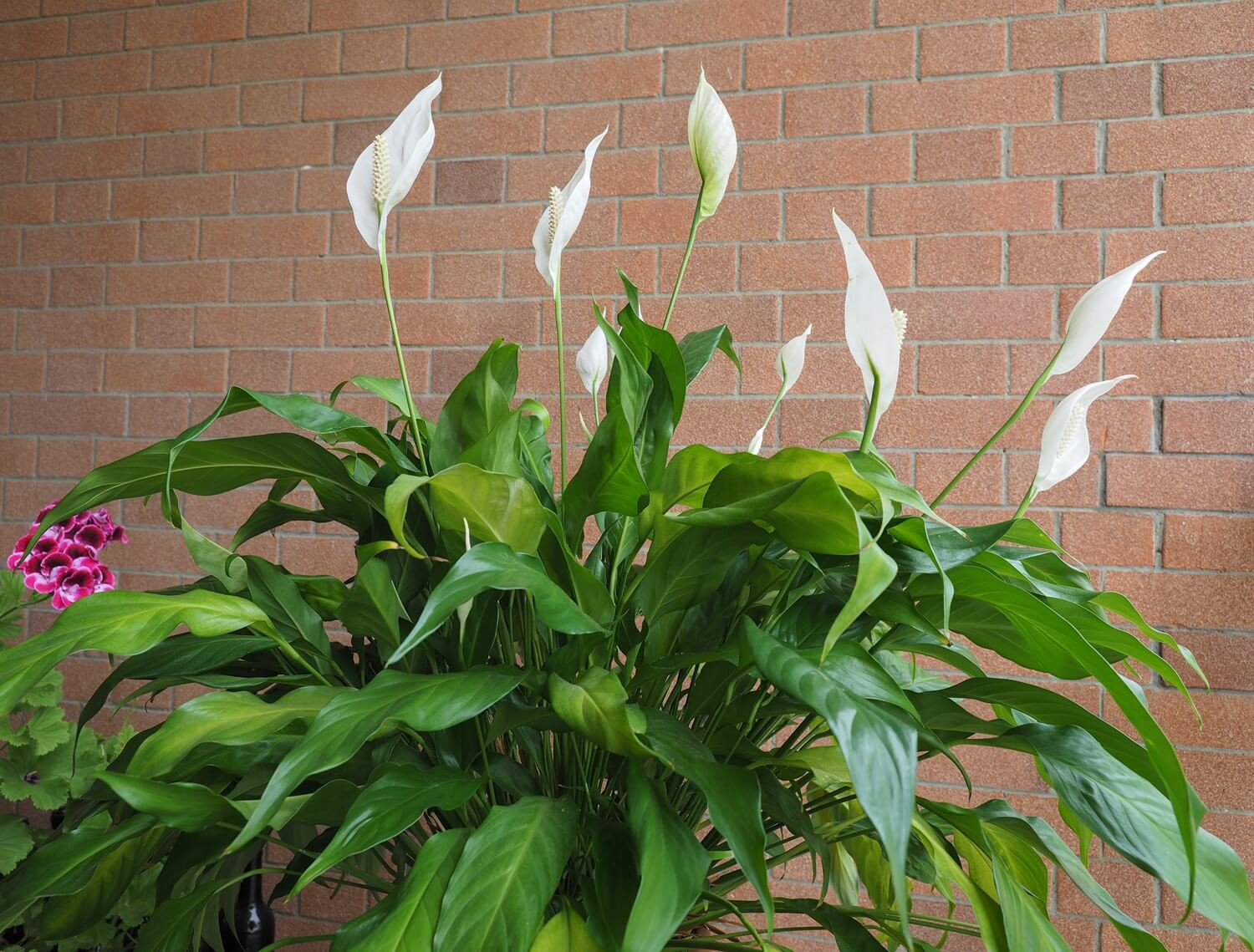
Ever seen your peace lily healthy one day and then crispy brown tips that seem to spread from one leaf to another the next day?
If you’ve been growing peace lilies for a while, you’d agree that this is one of the worst feelings. The good news is that it’s pretty common.
Brown tips usually mean something in the plant’s growing conditions needs adjusting. Water quality, inconsistent watering, excess fertilizer, low humidity, and direct sunlight can all contribute.
All you have to do is identify what is affecting your peace lily instead of trying every possible remedy at once.
In today’s post, I’ll be sharing how to work out what is going wrong, correct it, and prevent fresh leaves from developing the same damage.
Excited? Let’s begin:
Common Causes of Brown Tips on Peace Lily Leaves and How to Fix Them
1. Mineral and salt buildup from watering
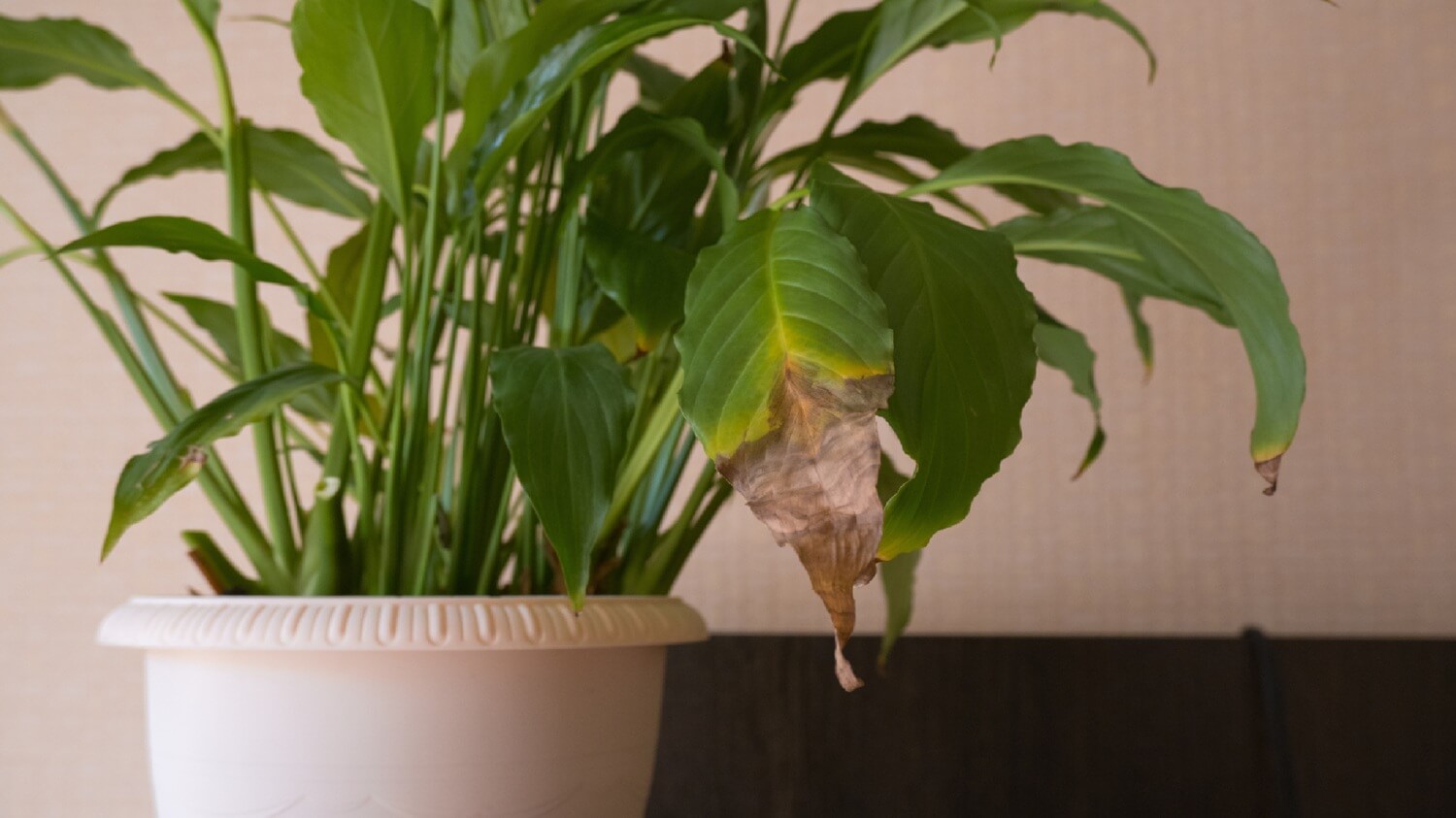
Peace lilies can be sensitive to certain minerals and chemicals in tap water, particularly fluoride. Over time, minerals from your water and soluble salts from fertilizer can accumulate in the potting mix. When concentrations become excessive, the leaf tips and edges may turn brown or black.
This problem is more likely when you water sparingly without occasionally allowing excess water to drain through the pot. You might also notice a whitish crust on the soil surface or around the rim of the container, although its absence does not rule out salt buildup.
How to fix mineral build up
Start by watering your peace lily thoroughly from the top. Apply water slowly over the soil until it drains freely through the drainage holes. This helps carry away some of the accumulated salts. Empty the saucer or decorative outer pot afterward so the roots do not sit in standing water.
If you suspect your tap water is contributing to the problem, try rainwater or distilled water. Avoid water from a household water softener because it may contain elevated sodium levels.
For more guidance on the process, see this article on how to water potted plants.
Pro Tip: existing brown tissue will not turn green again. Judge your recovery efforts by the condition of the new leaves and whether the browning stops spreading.
2. Incorrect watering
Peace lilies like their potting mix to remain lightly moist, but they do not thrive in permanently saturated soil. Both letting the mix become excessively dry and keeping the roots waterlogged can damage the plant.
An underwatered peace lily may droop dramatically, with leaf edges becoming dry and crispy. Overwatering is more complicated. Constantly wet soil can deprive roots of oxygen, eventually causing root damage that prevents the plant from taking up water properly.
The leaves may then develop brown or yellow areas even though the pot feels wet.
Rather than watering twice a week by habit, check the soil before reaching for your watering can. The right frequency depends on the temperature, light, pot size, soil mix, and how actively your plant is growing.
How to to water correctly
Check the top inch of potting mix with your finger. When it feels slightly dry, water the plant thoroughly, allowing excess water to drain away. Avoid waiting until the entire root ball is bone dry or the plant has repeatedly collapsed from thirst.
If the soil remains wet for several days, check that the pot has drainage holes and that the mix is not compacted. A pot that sits inside a decorative container can hide standing water, so check underneath it as well.
Watering from the bottom can work, but it does not automatically prevent leaf problems. If you use this method, occasionally water from the top and allow the excess to drain through to help flush out accumulated salts.
3. Too much fertilizer
A peace lily does not need heavy feeding to maintain its glossy foliage.
Applying fertilizer too frequently or using a solution that is too concentrated can leave excess salts around the roots, causing fertilizer burn. The tips and margins of the leaves are often among the first areas to show damage.
There is also little benefit in pushing growth when the plant is barely growing. Peace lilies generally need less fertilizer during periods of low light or slow winter growth than when they are actively producing leaves.
How to solve it
Use a balanced liquid houseplant fertilizer at the lower end of the recommended concentration during active growth.
A half-strength solution is a reasonable starting point if the product label permits it. Follow the label rather than feeding more often in the hope of producing larger leaves or more flowers.
If you have been feeding heavily and suspect salt buildup, flush the potting mix thoroughly with clean water, provided the container drains well. Stop fertilizing until the plant shows healthy new growth.
You do not need to fertilize after every watering. A modest, consistent feeding routine is safer than frequent heavy applications.
4. Poor drainage and unhealthy roots
A peace lily needs moisture, but its roots also need oxygen. Potting mix that stays waterlogged for too long can encourage root deterioration, while a compacted mix may drain poorly even when the pot has holes at the bottom.
You may notice several symptoms together: persistently wet soil, yellowing leaves, a drooping plant that does not perk up after watering, and brown or blackened roots. These signs suggest a root problem rather than a simple case of dry leaf tips.
How to fix drainage
Make sure it has drainage holes and that they are not blocked. If the soil has become dense or stays wet for too long, repot the plant into a fresh, airy houseplant mix that retains some moisture but drains freely.
A quality potting mix amended with perlite or fine bark can help improve aeration.
Avoid trying to fix a poorly draining pot by adding a layer of gravel at the bottom. This does not solve the drainage problem inside the root zone. The potting mix itself and the container's drainage are what matter.
If the roots smell rotten or feel soft and mushy, remove the plant from its pot and inspect them. Trim away clearly damaged roots with clean scissors and repot into fresh mix. Healthy roots should be firm rather than mushy.
You can find more guidance in this guide to improving drainage in potted plants.
5. Direct sunlight and excessive heat
Peace lilies naturally grow beneath the canopy of tropical vegetation, so their foliage is not suited to prolonged exposure to intense direct sunlight. Harsh sun coming through a window can scorch the leaves, leaving dry brown patches or edges.
The position of the damage can offer a clue. If leaves facing the window develop pale, bleached, or crispy areas while those farther from the light remain healthier, sun scorch may be the problem.
How to fix excessive heat
Move your plant into bright, indirect light. A spot near a window can work well, provided direct sunlight does not fall strongly on the leaves for extended periods. An east-facing window is often a convenient option, while a brighter window may need a sheer curtain or a position slightly away from the glass.
Do not move the plant into a very dark corner simply because peace lilies tolerate shade. They can survive in lower light, but growth and flowering are often better with moderate, indirect light.
Also, keep the plant away from hot air blowing directly from heaters or other sources of heat. Sudden temperature changes can add further stress.
6. Low humidity and dry indoor air
Peace lilies generally appreciate moderate humidity. When indoor air becomes very dry, especially near an air conditioner or heating vent, the leaf edges and tips can lose moisture faster than the plant can replace it.
Low humidity is not always the cause of brown tips, so check your watering routine, light exposure, and water quality before assuming that the air is too dry.
How to fix low humidity
Move the plant away from direct drafts and vents. If your room is consistently dry, grouping several plants together or using a humidifier may help create a more favorable environment.
Occasional misting is often suggested for peace lilies, but its effect on room humidity is brief. It is not a reliable fix for persistently dry air, and keeping foliage or flowers wet for long periods is unnecessary.
A naturally humid room, such as a bright bathroom, can suit a peace lily if there is enough indirect light. You can also explore other suitable plants in this guide to bathroom plants that absorb moisture.
What If the Peace Lily Flowers Are Turning Brown?
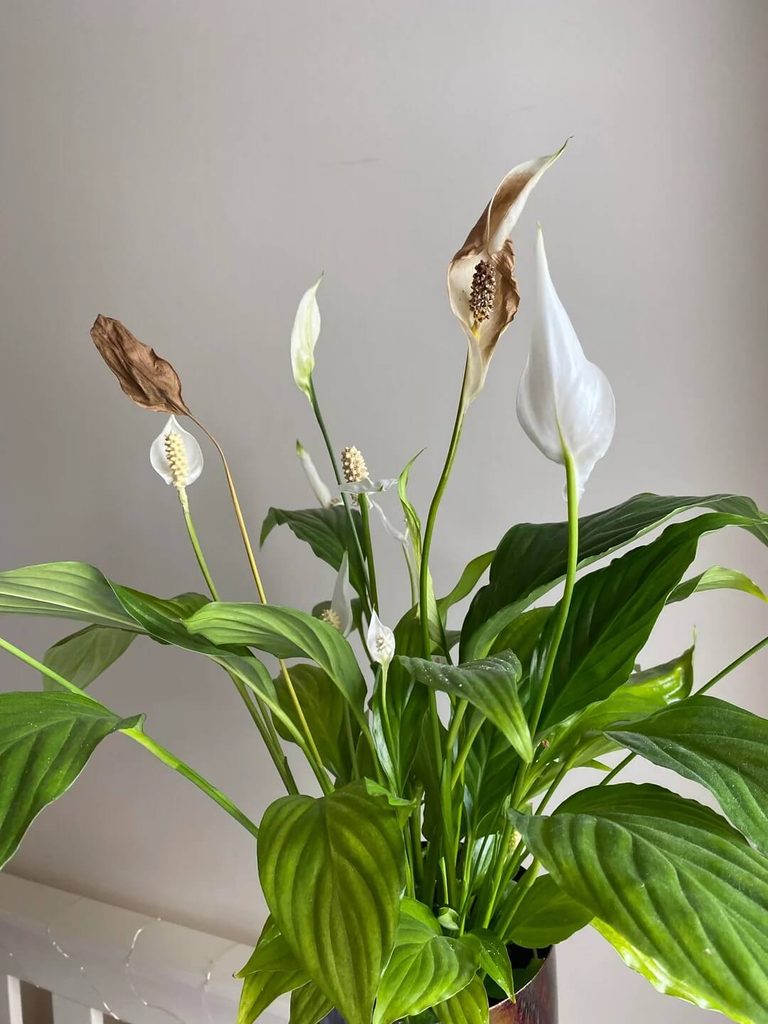
Brown flowers need a slightly different diagnosis from brown leaf tips. Peace lily flowers are actually made up of a white, leaf-like structure called a spathe surrounding a central spike. As a bloom ages, the spathe may gradually turn green and then brown.
If only an older flower is changing color while the leaves remain healthy, there may be nothing wrong with your care routine. It may simply be reaching the end of its flowering period.
Natural aging
Peace lily blooms do not remain white forever. As an individual flower ages, its appearance changes and it eventually fades.
What to do: Use clean, sharp scissors to cut the entire flower stalk near its base once the bloom has faded. This tidies the plant and removes tissue that is no longer attractive. It does not guarantee immediate new flowers, since flowering also depends on light, plant maturity, and growing conditions.
Stress from poor growing conditions
Flowers may fade prematurely when a peace lily is stressed by poor watering, inadequate light, excess fertilizer, or unhealthy roots. Brown spots on a bloom can also indicate tissue damage, so look at the surrounding leaves and soil before deciding that the problem is simply old age.
What to do: Correct the underlying problem rather than concentrating only on the flower. Keep the soil lightly moist without leaving the roots in standing water, provide bright indirect light, and avoid excessive feeding.
When the bloom is mostly brown, prune the flower stalk near its base with clean scissors. You cannot restore a browned flower, but healthier conditions can support future growth and flowering.
Can You Cut the Brown Tips Off Peace Lily Leaves?
Yes.
If the brown tips bother you, trim them with clean, sharp scissors. Follow the natural outline of the leaf and leave a very narrow margin of brown tissue rather than cutting into the healthy green part. This helps maintain the leaf's natural shape.
For a leaf that is mostly brown, yellowing, or badly damaged, remove the entire leaf stalk near its base. Do not strip away healthy leaves simply because a few older ones have developed brown edges. The green tissue still helps the plant produce energy.
Pruning improves the plant's appearance, but it does not correct the cause of the damage. If the underlying issue persists, new leaves may develop brown tips too.
A Quick Checklist for Preventing Brown Tips on Peace Lilies
Before making several changes at once, work through these checks:
- Check soil moisture. Water when the top inch of the mix has begun to dry, and never leave the pot standing in drained water.
- Flush out accumulated salts. Water thoroughly from the top and allow the excess to drain. Consider rainwater or distilled water if your tap water may be contributing to the problem.
- Review your feeding routine. Avoid concentrated or frequent fertilizer applications, especially when growth has slowed.
- Check the pot and potting mix. Make sure the pot has drainage holes, and the mix does not remain soggy for long periods.
- Adjust the plant's position. Provide bright, indirect light and keep it away from intense sun, hot air, and drying drafts.
- Trim damaged tissue. Remove brown tips or spent flower stalks for a tidier appearance, then monitor the new growth.
Also, check out how to get rid of brown tips on spider plants.
Conclusion
Brown tips on a peace lily do not necessarily mean you are losing the plant. Often, the damage is limited to the leaf edges, and the plant can continue growing once you correct the conditions causing it.
Start with the simple checks: feel the soil, make sure excess water can escape, review how often you fertilize, and look at the light reaching the leaves. If those factors seem right, investigate water quality and indoor humidity.
Most importantly, give your peace lily time to respond. Damaged tips will remain brown, so watch the next leaves for improvement rather than expecting the old ones to recover. Healthy new growth is the clearest sign that your changes are working.