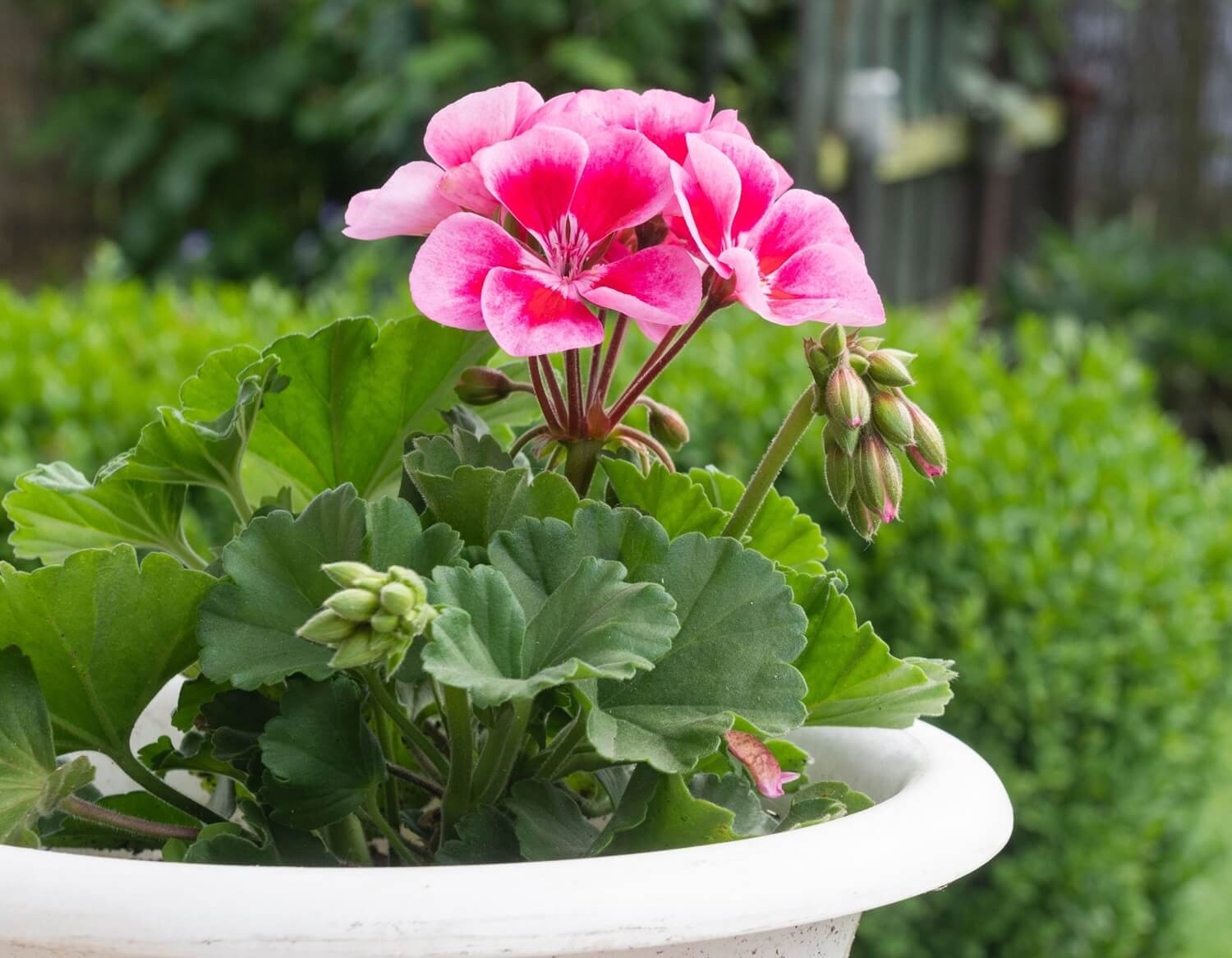
Geraniums are popular container plants for a reason. Their bright clusters of flowers can keep window boxes, hanging baskets, patios, and sunny windowsills looking colorful for much of the growing season.
They are also relatively easy to grow, provided you get a few important things right.
Most problems with potted geraniums start with their growing conditions.
Too little light can leave them tall and spindly, constantly wet soil can damage their roots, and neglecting to remove faded flowers can reduce the display.
Seedlings can also be vulnerable to damping-off before they have a chance to establish.
Fortunately, these problems are manageable once you understand what geraniums need.
This guide covers the varieties worth growing in containers, how to get them started, and the care practices that will help keep them compact, healthy, and flowering.
The Best Geranium Types to Grow in Pots
When choosing geraniums for containers, pay attention to their growth habits. Compact varieties are generally easier to manage in individual pots because they do not quickly outgrow their space. Trailing types, on the other hand, are particularly attractive in hanging baskets and window boxes.
Some good options include the 'Elite' and 'Orbit' geranium series, both of which offer compact growth. If flowers are not your main priority, consider Pelargonium citronellum 'Mabel Gray'. This variety is grown for its fragrant foliage, which can have scents reminiscent of mint, rose, lemon, cinnamon, and even chocolate.
Other common types include:
- Zonal geraniums (Pelargonium × hortorum): Also called common geraniums, these are recognized by the distinctive markings that often appear on their leaves. Varieties include plants with green, silver, tricolored, and white-marked foliage. Flowers commonly come in shades of pink, red, and white.
- Ivy-leafed geraniums (Pelargonium peltatum): These have a trailing habit and leaves that resemble ivy. Their growth makes them especially suitable for hanging baskets and window boxes, where the stems can spill over the edges.
- Martha Washington geraniums (Pelargonium × domesticum): Often sold as flowering pot plants during winter, these geraniums are valued for their attractive blooms. However, they are less tolerant of heat than common zonal geraniums, so they may struggle outdoors in hot conditions.
Think about where you intend to place the container before choosing a variety. A compact zonal geranium makes a good choice for a sunny windowsill, while an ivy-leafed variety is better suited to a hanging basket.
Steps for Growing Geraniums
Starting Geraniums from Seeds or Cuttings
You can grow geraniums from either seeds or cuttings. Many varieties have traditionally been propagated from cuttings, but seed-grown varieties are now widely available. Starting seeds indoors gives you the opportunity to raise young plants before moving them into their permanent containers.
The main challenge at the seedling stage is damping-off. This problem can cause young seedlings to collapse and die, particularly when growing conditions are too damp and containers have poor drainage.
Clean equipment is an important part of prevention. Wash reused seed trays and pots with soapy water, then disinfect them using a solution of one part chlorine bleach to nine parts water. Rinse thoroughly and allow the containers to dry before using them again.
Take the same precautions when preparing containers for cuttings. Starting with clean equipment reduces the risk of introducing disease organisms to young plants before they have established.
Choosing Pots and Containers
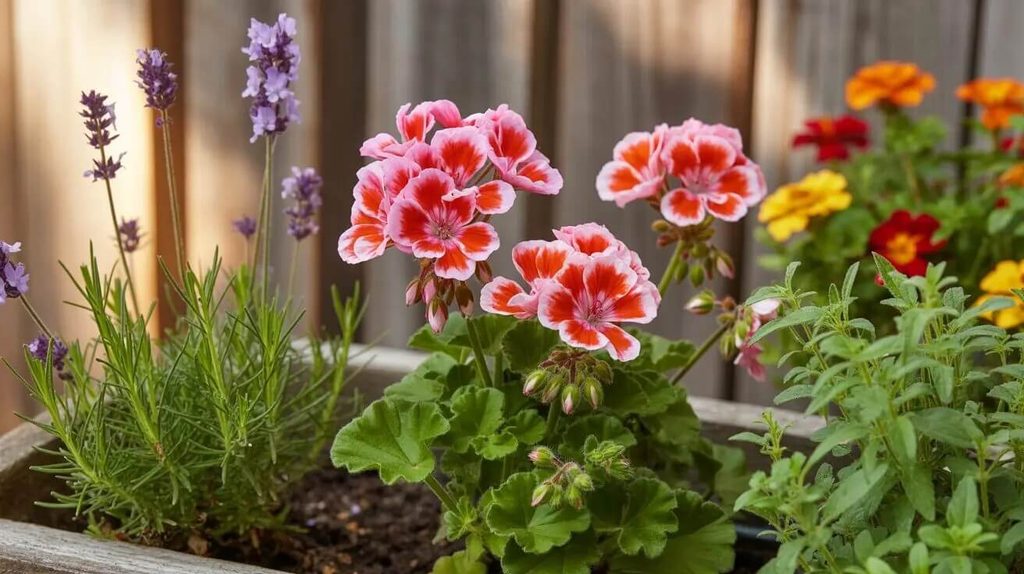
Geraniums are versatile container plants. You can grow them in individual pots, larger planters, window boxes, and hanging baskets. The best choice depends on the variety and how you want to display it including companionship with other plants.
Start by considering the plant's expected size. A compact variety will not need the same amount of space as a larger, more vigorous geranium. The container should give the roots enough room to develop without holding an unnecessarily large volume of wet potting mix.
Drainage is just as important as size. Geraniums need moisture to grow, but their roots should not remain in waterlogged soil. Choose containers with drainage holes that allow excess water to escape freely.
Selecting the Right Potting Mix
Geraniums are reasonably adaptable when it comes to soil pH, although a neutral to slightly acidic growing medium is a good choice. What matters more is having a mix that retains some moisture while allowing excess water to drain away.
A suitable medium should be well-draining and contain organic matter. Compost can help improve the growing mix, while a coarse material such as perlite or sand helps maintain an open structure.
You can prepare your own mixture or use a commercially prepared potting mix. Ready-made products offer a convenient option, particularly when you are growing several plants in containers.
One thing to watch is excessive moisture. Some organic-rich commercial mixes can remain wet for too long if you water too frequently. Consistently damp conditions may encourage fungus gnats, so allow the growing medium to dry somewhat between waterings rather than keeping it saturated.
Light and Temperature
Light has a considerable influence on how your potted geraniums grow and flower. Although some types tolerate partial shade, they generally produce a better display when they receive plenty of sunlight.
Aim for at least six hours of direct sunlight daily for good flowering. South- and west-facing windowsills can be useful locations, particularly during the winter months when indoor light levels are lower.
Insufficient light often produces a familiar problem: tall, weak stems with widely spaced leaves. The plant stretches towards the available light instead of developing compact growth. If your geraniums are becoming spindly, move them to a brighter position. Artificial lighting may also help when natural light is inadequate.
Temperature matters too. The growing conditions described in this guide are around 70–75°F during the day and 60–65°F at night. When light and temperature conditions are unsuitable, flowering and overall growth can suffer.
You can also pinch back the growing tips of young stems to encourage lateral growth. This helps develop a fuller plant rather than one that puts all its energy into a few long stems.
Watering Potted Geraniums
Geraniums do not appreciate constantly wet potting mix. They grow better when the soil dries somewhat between waterings, making it important to check moisture rather than follow a fixed watering schedule.
Feel the top inch of the growing medium. When it becomes dry to the touch, water thoroughly and allow the excess to drain through the bottom of the pot. The aim is to moisten the root zone without leaving the container sitting in water.
During active growth and warm weather, you may need to water more frequently. In winter, when growth slows, reduce watering accordingly. However, do not allow the root ball to become completely dry for extended periods.
Avoid overhead watering where possible. Wet foliage can encourage disease, particularly when plants are crowded or conditions are humid. Directing water onto the potting mix also helps keep the leaves and flowers cleaner.
Check your plants regularly, especially during hot weather. Container soil can dry faster than garden soil, and a geranium that looked adequately watered yesterday may need attention today.
Applying Fertilizer
Potted geraniums need nutrients to support healthy foliage and flowering, but feeding too heavily is not necessary. Wait until young plants are established before beginning a regular feeding routine.
A water-soluble or slow-release fertilizer formulated for container plants can be used. For liquid fertilizer, applying a half-strength solution every two weeks is one approach. Follow the product label for the correct dilution and application frequency.
Plants growing indoors or in low-light conditions generally need less fertilizer because their growth is slower. Feeding them at the same rate as vigorously growing outdoor plants can result in unnecessary nutrient buildup.
Apply fertilizer to moist soil rather than allowing a concentrated solution to contact dry roots. Also, reduce or stop feeding during winter when the plants are not actively growing.
A balanced fertilizer such as a 20-20-20 formulation is one option mentioned for geraniums. However, product concentrations vary, so always follow the manufacturer's instructions rather than relying on a single dosage for every fertilizer.
Pruning and Deadheading Geraniums
Regularly removing faded flowers is one of the simplest ways to keep potted geraniums looking attractive. Once a flower cluster begins to wither, remove it rather than leaving it to deteriorate on the plant.
This practice, known as deadheading, prevents the plant from putting unnecessary energy into seed production and encourages further flowering.
How to deadhead geraniums
Do not simply pull off the individual faded flowers at the top of the cluster. Follow the flower stalk down to the point where it joins the main stem, then remove the entire spent stalk.
You can use clean pruning shears or snap the stalk off by hand. Work carefully so you do not damage nearby leaves or young growth.
Continue checking the plant throughout the flowering season. Removing faded clusters as they appear keeps the display tidy and encourages the plant to produce more flowers. You can do this every couple of weeks or remove a few spent stalks whenever you tend to your plants.
If the plant has become too tall or untidy, cutting back selected stems can also encourage fuller growth. Combined with adequate sunlight and regular deadheading, this helps maintain a more compact appearance.
Overwintering Geraniums
Geraniums are not frost-hardy, so outdoor potted plants need protection when temperatures begin to fall. They are also sensitive to excessive summer heat, which can affect flowering and overall performance.
Before bringing your plants under shelter, inspect them carefully. Remove any plants showing clear signs of serious disease or insect infestation so problems do not spread to the healthy ones.
For the remaining plants, cut back the top growth to approximately six inches and place the pots in a sunny indoor location. A bright windowsill gives them access to natural light during the period when outdoor conditions are unsuitable.
Reduce watering as growth slows, but do not allow the roots to dry out completely. Once the danger of frost has passed, you can gradually return the pots outdoors.
Managing Pests and Diseases
Healthy geraniums are generally better equipped to cope with pests and diseases than plants already struggling with poor growing conditions. That is why good watering habits, adequate sunlight, suitable nutrition, and regular maintenance should form the foundation of your pest-management routine.
Even with good care, however, you should inspect your plants regularly. Common pests include aphids, mealybugs, whiteflies, mites, caterpillars, cabbage loopers, and fall cankerworms. Four-lined plant bugs, scale insects, and slugs can also cause damage.
Look closely at the undersides of leaves and around young shoots, where insects may be hiding. Remove badly infested plant parts and deal with visible pests before the problem becomes widespread.
Geraniums can also develop several diseases.
Bacterial leaf spot is a particular concern in warm, wet conditions, especially when plants are crowded and air circulation is poor. Infected foliage may develop spots and deteriorate over time.
Botrytis blossom blight and leaf spot are associated with fungal infection. Removing old flowers as soon as they fade and allowing air to circulate around the plants can help reduce problems.
Other diseases to watch for include gray mold, rust, and viral infections. If you notice unusual spots, discoloration, or distorted growth, avoid assuming that every problem is caused by watering. The pattern of damage can help you identify what is happening.
For a closer look at symptoms and management, see this guide to geranium diseases.
Geranium Care and Common Problems
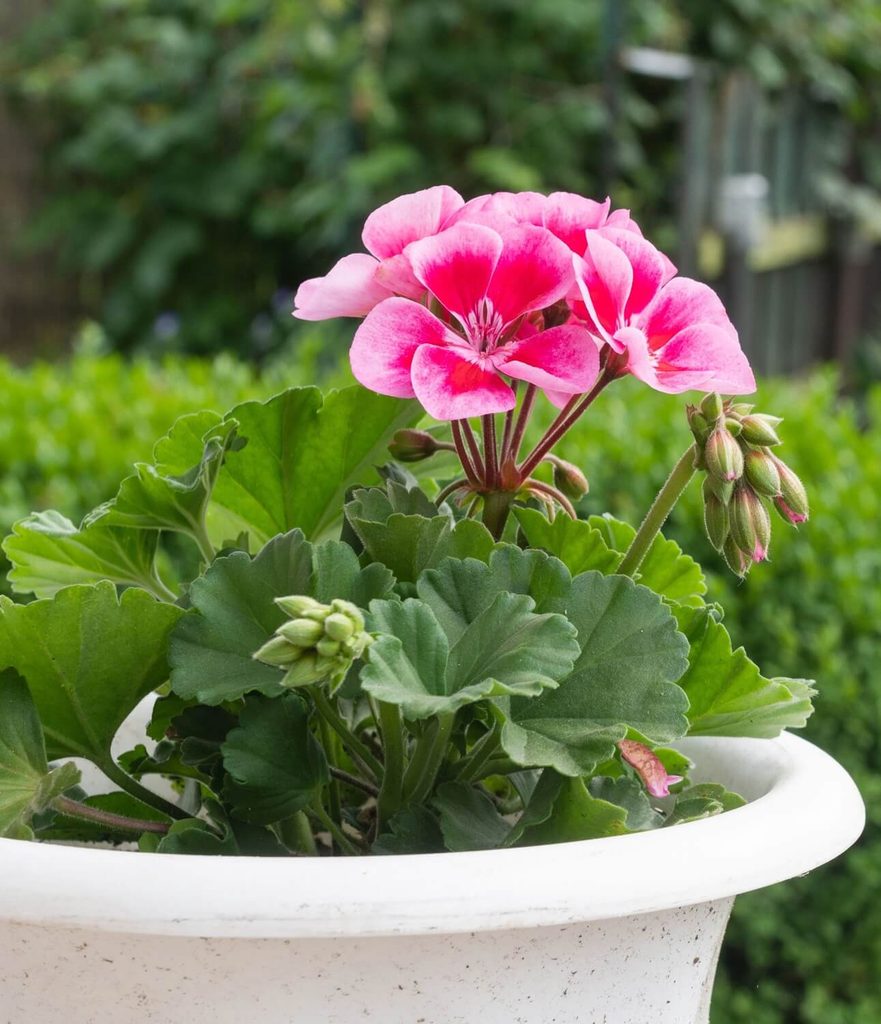
Even when you follow a regular care routine, your plants may occasionally show signs of stress. The appearance of the leaves and stems can provide useful clues about what needs attention.
Geranium Leaves Turning Yellow or Brown
Yellow leaves can sometimes indicate a nitrogen deficiency, particularly when the older foliage is affected and the plant is not receiving adequate nutrients.
However, yellowing accompanied by brown discoloration deserves a closer look at your watering routine. Excessively wet soil can damage the roots and interfere with their ability to take up water and nutrients.
Check the moisture level before adding fertilizer. If the potting mix is staying wet for too long, improve drainage and allow it to dry somewhat between waterings.
Geranium Plants Becoming Tall and Spindly
A geranium that produces long, weak stems with plenty of space between its leaves is often not receiving enough light. This is particularly common when plants are kept indoors during winter or placed on a windowsill that does not receive sufficient sunlight.
Move the plant to a brighter location where it can receive several hours of direct sunlight. When outdoor conditions are suitable, you can also move it outside to a sunny position.
Trim back some of the stretched stems and pinch the growing tips to encourage side shoots. With improved light and regular pinching, the plant should develop a more compact shape.
Blister-Like Growths on the Undersides of Geranium Leaves
Small, raised blisters on the undersides of geranium leaves may indicate a condition called edema. It is a physiological problem rather than an insect infestation or infectious disease.
Edema occurs when the roots absorb water faster than the leaves can release it. It is more likely when the growing medium remains wet while humidity is high and light levels are low.
The affected leaf cells swell, producing small blisters that may eventually rupture. These areas can turn tan or brown and develop a corky texture. In severe cases, the leaves may yellow and fall from the plant.
Although the symptoms can look alarming, edema does not usually cause serious harm to an otherwise healthy geranium.
To manage it, reduce watering, particularly during cloudy weather when the plant uses less water. Improve light exposure and avoid keeping the potting mix constantly saturated.
Conclusion
Growing geraniums in pots is a rewarding way to bring color to sunny windowsills, patios, and outdoor seating areas. You also have plenty of varieties to choose from, including compact zonal types, fragrant foliage geraniums, and trailing varieties for hanging baskets.
The most important part of geranium care is getting the growing conditions right. Give the plants enough light, use a potting mix that drains well, water when the soil begins to dry, and avoid excessive feeding. Regular deadheading will help keep the plants tidy and encourage continued flowering.
Pay attention to changes in the foliage too. Yellow leaves, stretched stems, and blister-like marks can tell you when something in the growing environment needs adjusting.
Once you understand how your geraniums respond to light, moisture, and feeding, keeping them healthy becomes much easier.