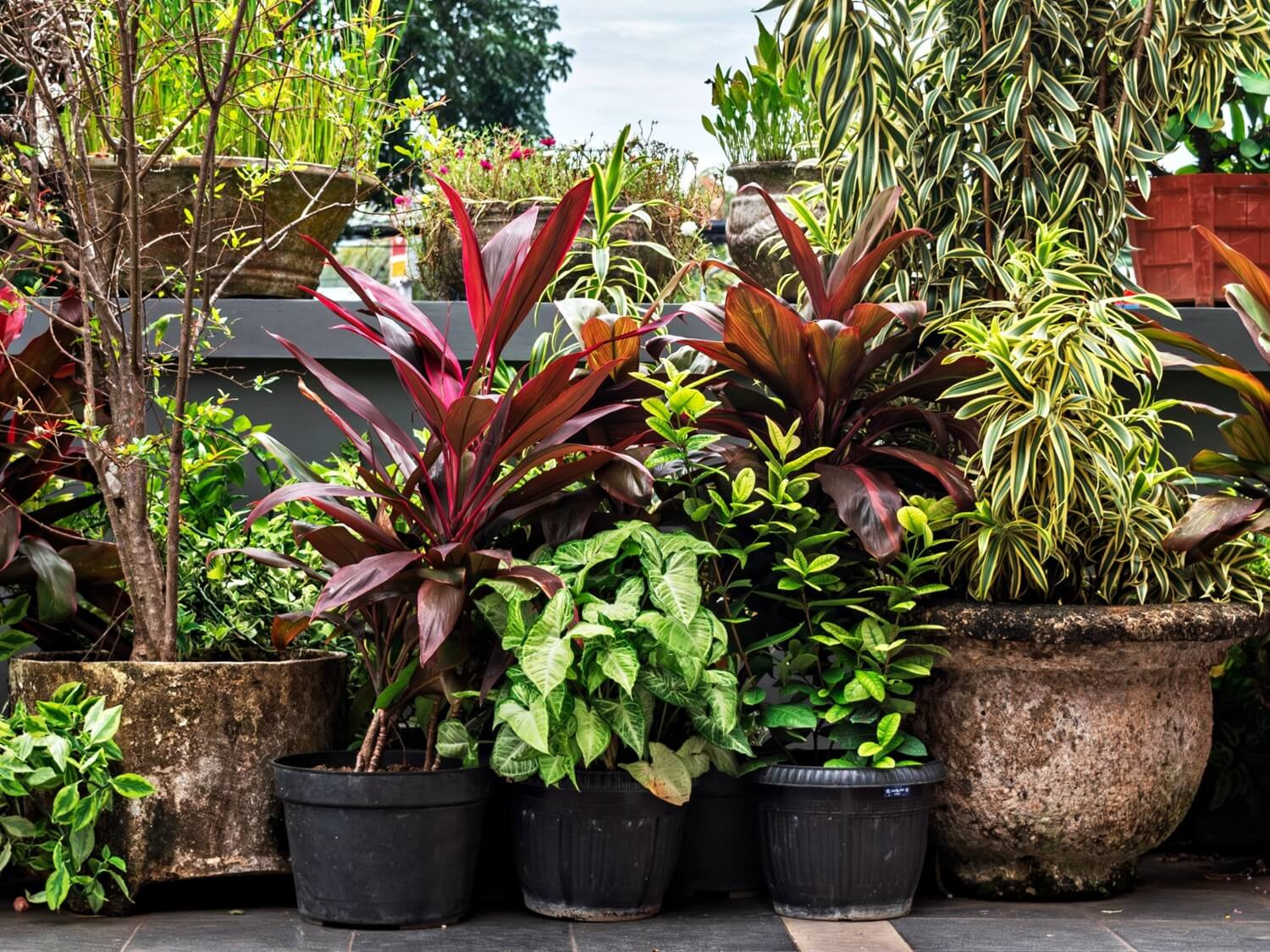
I'm a big fan of backyard patios, but I'm even more particular about privacy.
There's something rather uncomfortable about sitting down to enjoy your morning coffee only to realize that the neighbor upstairs has a perfect view of everything you're doing.
And while fences, screens and outdoor curtains can solve the problem, I'd much rather have a few beautiful plants doing the job. They soften the space, introduce some greenery and, when chosen well, make it feel as though you've created a little garden room of your own.
The difficulty is that most patios, balconies and decks don't have enough ground space for large trees or conventional hedges.
That's where tall potted plants come in.
You can position them along an exposed railing, beside a seating area, or wherever you need to block an unwanted view.
I've put together seventeen options, ranging from fast-growing bamboo and leafy tropical plants to ornamental grasses and flowering shrubs.
Not all of them offer the same level of privacy, though. Some can form a fairly effective screen, while others are better for filling gaps and making the arrangement look more natural.
Let's look at what you can grow.
17 Tall Potted Plants for Privacy on Your Patio
1. Bamboo (Bambusa spp.)
Bamboo is one of the quickest ways to add greenery and height to an exposed outdoor space. Its upright canes and thick foliage make it a natural choice for privacy screens, especially when you want something that grows taller without spreading across the entire patio.
Gardeners often raise concerns about bamboo's aggressive growth, but the variety you choose makes a considerable difference.
Clumping bamboo, including suitable varieties of Bambusa multiplex, grows in tighter groups and is generally easier to manage in containers than running bamboo.
A large pot also gives you some control over its growth, although it doesn't mean you'll never have to divide or prune the plant. Bamboo can eventually fill its container with roots and rhizomes, so give it enough room from the beginning.
I would also avoid placing a large bamboo container somewhere exposed to strong winds. The foliage catches plenty of wind, and a tall plant in a small pot can easily become unstable.
2. Sweet Bay (Laurus nobilis)
Sweet bay is a lovely option when you want a privacy plant that looks more ornamental. Its evergreen leaves give you greenery throughout the year, while the aromatic foliage adds another reason to keep it close to the house.
You can grow it as a small standard tree or prune it into a fuller, rounded shrub. I'd favor the bushier shape for patio privacy because the branches provide better coverage and fill more of the available space.
There's also the added benefit of having fresh bay leaves available for cooking.
The tree is relatively easy to maintain in a container, and regular pruning helps keep its size under control. Although mature bay trees can become quite large in the ground, container-grown plants generally remain more manageable.
Give yours a sunny position, well-drained potting mix, and regular watering during active growth. Bay is reasonably tolerant of dry conditions once established, but container plants can dry out faster than those growing in garden soil.
In colder climates, protect the plant from prolonged freezing temperatures by moving the pot somewhere sheltered.
3. Fiddle-Leaf Fig (Ficus lyrata)
The fiddle-leaf fig is one of those plants that can make an otherwise ordinary patio look considerably more interesting. Its enormous, violin-shaped leaves create a tropical appearance, and a mature specimen can reach several feet in height.
I have one on my balcony, and it's certainly an eye-catching plant. However, I've also learned that getting it to branch isn't always a walk in the park.
Fiddle-leaf figs tend to grow upwards, sometimes with most of their leaves concentrated towards the top. You can try pinching or pruning the growing tip to encourage lateral branches, but the response varies.
Some plants develop a lovely full canopy, while others remain rather sparse.
For this reason, buy a specimen that's already reasonably bushy if privacy is your main concern. You'll get much better coverage than you would from a young plant with a long, bare stem.
Fiddle-leaf figs prefer bright, indirect light and a sheltered position. They don't appreciate sudden changes in their environment, so avoid moving them repeatedly between very different lighting conditions.
4. Schefflera (Schefflera spp.)
Schefflera, commonly called the umbrella plant or umbrella tree, is another excellent foliage option for a patio. Its leaves grow in attractive clusters, creating a full canopy that can help screen an exposed seating area.
There are several varieties to choose from.
The larger umbrella tree, Schefflera actinophylla, can grow into a substantial tree, while the dwarf umbrella tree, Schefflera arboricola, is much easier to manage in containers.
For smaller patios, I'd lean towards the dwarf variety. It's naturally bushier, produces plenty of foliage, and responds well to occasional pruning. You can also pinch back the growing tips to encourage branching and prevent the plant from becoming too leggy.
Schefflera enjoys warmth and bright conditions, although it can tolerate some shade. Water when the upper layer of potting mix begins to dry, and avoid leaving the container waterlogged.
If you live somewhere with cold winters, remember that these are tropical plants. Move the pot to a protected location before temperatures drop too far.
5. Tropical Hibiscus (Hibiscus rosa-sinensis)
A hibiscus tree can provide something that many ordinary privacy plants lack: a beautiful display of flowers.
Its glossy green foliage creates a pleasant backdrop for large trumpet-shaped blooms, which come in shades of red, pink, yellow, orange, and white. With the right variety and enough room, hibiscus can develop into a substantial shrub.
Regular pruning helps maintain a manageable shape while encouraging lateral growth. This is worth doing because a bushy hibiscus provides much better screening than one that has been allowed to grow into a tall, narrow plant.
6. Dwarf Lemon Tree (Citrus limon)
A dwarf lemon tree is a lovely addition to a patio when you want something that provides both ornamental value and a useful harvest.
Its evergreen leaves, fragrant white flowers, and bright yellow fruits make it attractive throughout the year. The flowers are especially pleasant when the plant is positioned close to an outdoor seating area.
You can maintain a container-grown lemon tree through regular pruning, although it's important not to remove too much fruiting growth. Choose a dwarf variety or a plant grafted onto dwarfing rootstock if you want to keep its size manageable.
For privacy, look for a bushy specimen with several branches rather than one with a tall, exposed trunk. A fuller tree will provide better coverage around a seating area.
They can become surprisingly productive in containers, but don't expect a newly purchased young tree to provide an immediate privacy screen. Give it time to grow and develop its canopy.
7. Croton (Codiaeum variegatum)
If ordinary green foliage looks a little predictable to you, croton offers a welcome change. Its thick, leathery leaves come in striking combinations of green, yellow, orange, red, and burgundy.
There are numerous cultivars, each with a slightly different leaf shape and color pattern. Some have broad leaves, while others produce narrow, twisted foliage that gives the plant an almost sculptural appearance.
Crotons are tropical evergreen shrubs that can develop considerable height in warm conditions. They also respond well to container growing, making them suitable for patios where you want plenty of color without taking up too much ground space.
Expose your plants to adequate light to maintain the colorful foliage, although very intense afternoon sunshine can scorch some varieties.
One advantage of growing several crotons together is that their different leaf colors can make a privacy arrangement look far more interesting than a row of ordinary green shrubs.
8. Dracaena (Dracaena spp.)
Dracaenas are useful when you're working with a narrow patio or balcony and need plants that grow upwards rather than spreading extensively.
The popular corn plant, Dracaena fragrans, has cane-like stems topped with long, arching leaves. Cultivars such as 'Massangeana' have attractive yellow-green stripes running through the foliage.
Depending on the variety and growing conditions, dracaenas can reach several feet in height. You can also control their growth through pruning, which helps when the plant starts becoming too tall for its available space.
However, some varieties concentrate most of their foliage towards the top of the stem. If you're trying to block a neighbor’s view at seating level, choose a plant with several leafy crowns or group two or three specimens at different heights.
9. Mountain Cabbage Tree (Cordyline indivisa)
The mountain cabbage tree looks a little like a small palm and makes an interesting focal point in a large patio container.
Its upright trunk supports a crown of long, broad, blue-green leaves that create an attractive contrast with the smaller foliage plants around it. With time, it can reach several meters in height, although container-grown specimens generally remain more manageable.
One thing to consider is where the foliage develops.
Most of the leaves grow towards the top of the trunk, leaving the lower portion relatively open. This makes the plant useful for adding height, but you'll need other plants if you want to screen the entire space.
I like the idea of pairing it with bushier evergreen plants or ornamental grasses. The combination gives you different foliage textures while filling some of the open space around the container.
10. Big Bluestem (Andropogon gerardii)
Ornamental grasses deserve a place in patio privacy arrangements, especially when you want something softer than a row of shrubs.
Big bluestem is a warm-season grass native to North American prairies. It produces upright stems and narrow foliage that can reach several feet in height, with some varieties growing considerably taller under favorable conditions.
Its blue-green leaves are attractive during the growing season, but the plant becomes even more interesting towards autumn when the foliage develops bronze and brown tones.
You can grow it in a large container, although it needs enough room for its roots to develop. A cramped pot will restrict its growth, so avoid starting with a tiny planter.
Big bluestem likes full sun and handles periods of dry weather once established. The foliage eventually dies back during winter, so you'll need to cut it down in early spring before fresh growth appears.
11. Fountain Grass (Pennisetum alopecuroides)
Fountain grass is one of those plants that can make an outdoor space feel more relaxed. Its narrow leaves grow in arching clumps, while the flowering stems produce soft, brush-like plumes that move beautifully in the breeze.
Depending on the variety, fountain grass can reach around 2–5 feet in height. Some taller cultivars are especially useful when you want to soften the view around a balcony or patio.
You can grow it in a large container and combine it with flowering plants or evergreen shrubs. I especially like the contrast between its fine foliage and the broader leaves of plants such as hibiscus and elephant ears.
The foliage usually turns brown during winter. You can leave it standing for a while because the dried leaves and seed heads still add some interest to the patio. Cut the old growth back in late winter or early spring before new shoots emerge.
12. Elephant Ear (Colocasia esculenta)
Elephant ears can transform a small patio into something resembling a tropical garden.
Their enormous, heart-shaped leaves are hard to miss, and a mature plant can develop enough foliage to obscure parts of an exposed seating area.
Some varieties produce leaves several feet long, although the eventual size depends on the cultivar and growing conditions. If you want a substantial display, choose a variety known for its large foliage.
These plants enjoy warmth, moisture, and rich growing media. They need regular watering during active growth, and container-grown specimens benefit from feeding to support the large leaves.
However, those enormous leaves can tear when exposed to strong gusts of wind, so a sheltered position will help keep the plant looking attractive.
In colder regions, you may need to bring the container indoors or lift and store the corms before winter. In warm climates, elephant ears can remain outdoors and produce fresh foliage throughout the growing season.
13. Yucca (Yucca filamentosa)
Yucca is a good choice for anyone who wants an attractive, low-maintenance plant that can tolerate sunshine and periods of dry weather.
Its stiff, sword-shaped leaves grow in dense rosettes, creating an architectural appearance that works well in decorative containers. Some varieties also have golden or cream-colored margins that brighten the foliage.
It's worth setting expectations about its height, though. Yucca filamentosa is primarily a low-growing plant, and much of its impressive height comes from the flowering stalk. The foliage itself doesn't create the kind of tall screen you'd get from bamboo or a bushy shrub.
I'd use it to add structure around larger plants rather than rely on it as the main privacy barrier.
It can also make an attractive addition to a sunny patio where you don't want to spend too much time watering.
14. Cosmos Flowers (Cosmos bipinnatus)
Cosmos is a lovely way to introduce seasonal height and color into a patio arrangement. Its delicate foliage and cheerful flowers create a relaxed, informal appearance that works well alongside ornamental grasses and larger shrubs.
The flowers are commonly available in pink, white, and other shades, depending on the variety. Some cultivars can reach 4–5 feet tall, making them useful for adding height without the expense of buying a small tree.
Cosmos is also relatively easy to grow from seed. You can sow directly into containers or raise seedlings elsewhere and transplant them once they're established.
Remember, the stems and leaves don't form a solid wall, so you'll still have plenty of visibility through the plants.
Grow several together if you want a fuller display, and provide support when tall stems begin leaning.
15. Hostas (Hosta spp.)
The hostas are an excellent addition to shaded patios, especially when you want to fill empty spaces with attractive foliage.
They come in a wide range of colors, including blue-green, yellow, deep green, and variegated combinations. Some varieties also have enormous leaves that make them stand out in large decorative pots.
Their main attraction is the foliage rather than height. Most hostas form low or medium-sized mounds, so they're not going to screen your patio on their own.
Instead, use them around the base of taller plants such as bay trees, Dracaenas, or Scheffleras. This helps fill the lower spaces and makes the entire arrangement look fuller.
16. Emerald 'n' Gold Euonymus (Euonymus fortunei 'Emerald 'n' Gold')
Emerald 'n' Gold euonymus, also known as Wintercreeper, is an evergreen shrub with dark green leaves edged in golden yellow. It's an attractive way to introduce some contrast into a patio arrangement, especially when surrounded by plants with darker foliage.
It's relatively adaptable and can grow in full sun or partial shade. You can also maintain its shape through occasional pruning, making it suitable for decorative containers.
There's a common misconception that this cultivar grows into a tall privacy shrub. It generally has a low, spreading habit, often reaching only around 1–2 feet in height.
Its foliage is much more suitable for filling gaps around the bases of taller plants than blocking a view.
You can allow it to spill slightly over the edges of a large container, which creates a softer appearance and helps tie the arrangement together.
Caution: Wintercreeper can become invasive in some regions. Check local growing recommendations before planting it outdoors.
17. Geraniums (Pelargonium x hortorum)
Geraniums are among the most familiar patio plants, and it's easy to see why. They're colorful, relatively easy to maintain, and grow happily in containers.
Their rounded leaves and clusters of flowers come in different shades of red, pink, white, salmon, and purple. You can also find varieties with attractive foliage patterns, making them useful even when they're not flowering.
Ordinary zonal geraniums are relatively short, so don't expect them to provide much screening on their own. Their real value is in filling empty spaces around taller container plants.
For example, you could plant several around the base of a lemon tree or hibiscus. The combination of flowers and taller foliage makes the arrangement look fuller and more inviting. Also, don’t forget to check out these landscaping ideas for your small backyard and privacy trees.
Conclusion
Here’s the thing:
You don't need seventeen different plants to create a private outdoor space. In fact, a few well-chosen specimens will often do a better job than filling every available corner with containers.
But most importantly, consider the actual view you're trying to block.
A tall plant isn't automatically a good privacy screen. Some grow upwards with most of their foliage at the top, leaving the lower section completely open.
Think about where your neighbor’s view meets your patio before deciding what to buy.